Zendo Etiquette
Please remove your shoes upon entering the building. Socks are worn indoors, or you may walk barefoot. Wear clothing that is comfortable for sitting practice, and non-distracting to others. If circumstances dictate that you enter or exit during zazen please do so as quietly as possible. Otherwise, it is customary to wait until kinhin to join or leave practice. With hands in Gassho, bow upon entering the zendo, before the zafu, and to the sangha members opposite. Bows are offered at other transitions, such as at the beginning and end of periods of sitting and walking meditation, periods of chanting, and at the end of the practice period. If you choose not to bow, simply sit or stand quietly. Bells mark transitions in the practice period. Three tones signal the beginning of a sitting period; two tones signal the beginning of kinhin; one tone signals the end of practice. If it becomes necessary that you stay seated after zazen because of physical discomfort, simply gassho from your cushion and rejoin the others when you are able.
Glossary of Zen Terms
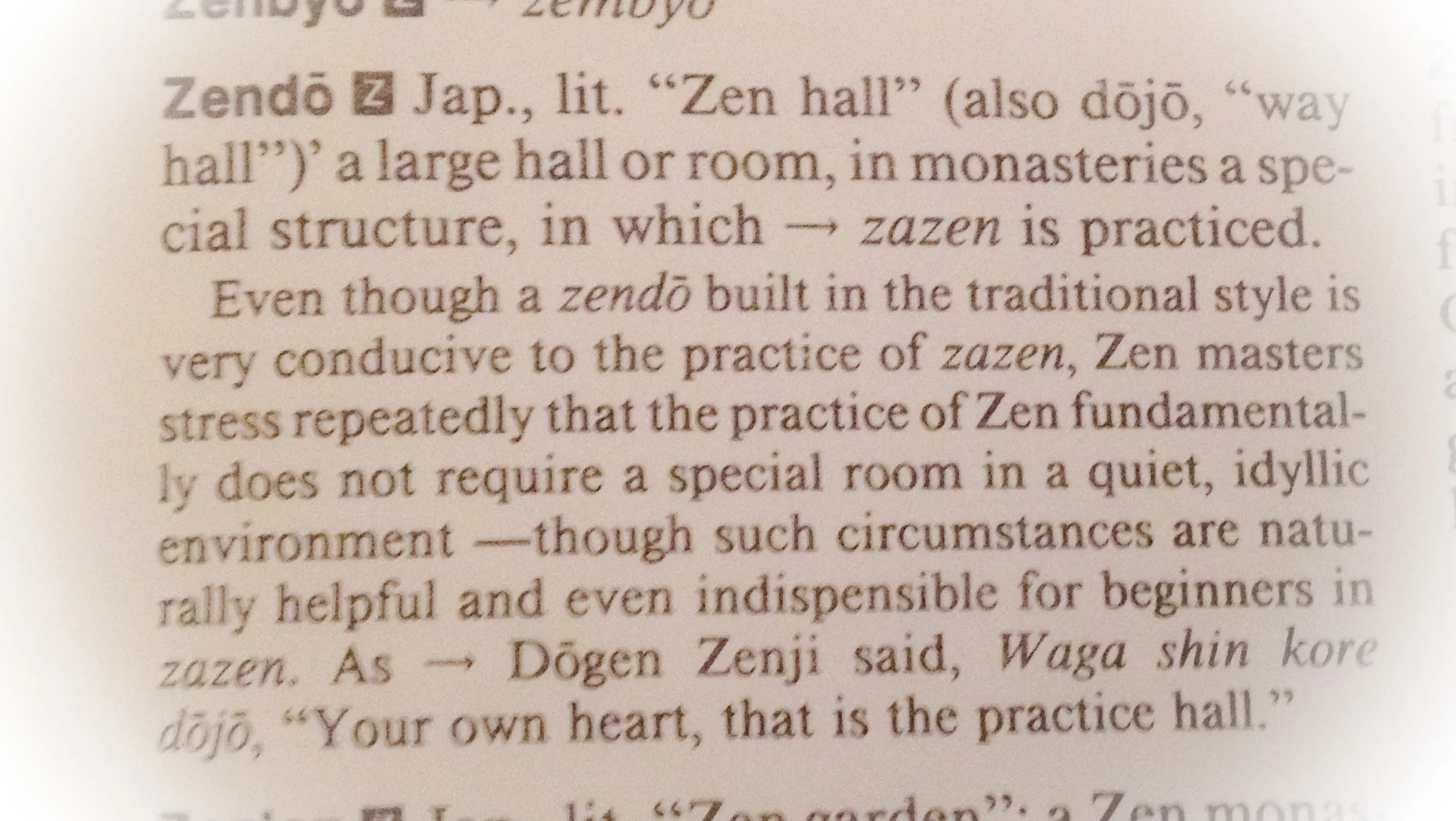
Dana is a Pali or Sanskrit word signifying generosity or giving, the voluntary giving of material, energy, or wisdom to others. Gassho is Japanese for "palms of the hands placed together". Kinhin is a Japanese term for walking meditation. Sangha is a Pali or Sanskrit word for the Buddhist community. Zabuton is Japanese for "sitting mat". Zafu is a Japanese term for a round cushion used for seated meditation. Zazen is a Japanese term for seated meditation. Zendo is a Japanese term for meditation hall.
Frequently Asked Questions
What should I wear to the zendo?
Wear clothing that is comfortable for sitting practice and non-distracting to others, as described in the Zendo Etiquette section above.
Do I have to bow or chant during practice?
No. Bows and chants are customary parts of the practice period, but if you choose not to bow or chant, you may simply sit or stand quietly.
What if I arrive late or need to leave early?
Enter or exit as quietly as possible if circumstances require it. Otherwise, it is customary to wait until kinhin to join or leave practice.
What do the bells mean during a practice period?
Bells mark transitions: three tones signal the beginning of a sitting period, two tones signal the beginning of kinhin, and one tone signals the end of practice.
What is kinhin?
Kinhin is the Japanese term for walking meditation, usually performed between periods of zazen. At Great Wind, we walk very slowly in a series of half-steps.
Great Wind Zendo
📍 52 W Broadway St, Danville, IN, 46122